inquiry
laat een bericht achter
Als u geïnteresseerd bent in onze producten en meer details wilt weten, laat dan hier een bericht achter, we zullen u zo snel mogelijk antwoorden.
indienen
Bengbu Longkai Lasbeschermingstechnologie Co., Ltd.
Thuis

papr-beademingsapparaat

papr-beademingsapparaat

  • Why Woodworkers Need a PAPR
    Why Woodworkers Need a PAPR
    Dec 15, 2025
      When people think of woodworking, images of flying wood shavings and the rich aroma of wood often come to mind. Yet few pay attention to the invisible "health killers"—wood dust. Many craftsmen are used to wearing regular masks while working, thinking, "As long as the large particles are blocked, it’s fine." But with the increasing awareness of occupational health, more and more practitioners are turning to papr system. Today, let’s explore why woodworking, a seemingly "down-to-earth" craft, requires such "professional-grade" protective equipment.   First, it’s crucial to understand: the hazards of wood dust are far greater than you might imagine. Wood processing generates not only visible wood chips but also a large amount of inhalable particles (PM2.5). These tiny particles can penetrate deep into the respiratory tract, and long-term accumulation may lead to occupational diseases such as pneumoconiosis and bronchitis. What’s more troublesome is that dust from some hardwoods (such as rosewood and oak) contains allergenic components, which can cause skin itching and asthma attacks upon contact. Regular masks either have insufficient filtration efficiency or poor sealing—dust can easily seep through gaps around the nose and chin, greatly reducing their protective effect. The core advantage of a positive air purifying respirator lies in its "active protection + high-efficiency filtration": it actively draws in air through a built-in fan, filters it through a HEPA filter, and then delivers the clean air to the mask, blocking dust intrusion at the source.   The complexity of woodworking scenarios further highlights the irreplaceability of PAPRs. Woodworkers handle a variety of tasks, from sawing and planing to sanding and finishing. Each process produces different pollutants: sawing hardwood generates a lot of sharp wood chips, sanding creates ultra-fine dust, and finishing may be accompanied by volatile organic compounds (VOCs). Regular masks are often helpless against such "composite pollution," but PAPRs can be fitted with different filters according to different processes—they not only filter dust but also provide protection against gaseous pollutants like VOCs. More importantly, woodworking operations often require frequent bending over and turning around, which can easily shift regular masks. PAPR masks, however, are designed to fit closely to the face and are secured with headbands or safety helmets. Even when bending over to sand a tabletop or tilting the head to cut wood for long periods, they maintain a good seal.   Comfort during long hours of work is a key reason why PAPRs are gaining popularity among woodworkers. It’s common for woodworkers to work more than 8 hours a day. Regular masks, especially high-protection ones like N95s, have poor breathability. Wearing them for a long time can cause chest tightness, shortness of breath, and leave marks on the face. PAPRs, on the other hand, maintain a slight positive pressure inside the mask through continuous active air supply, making breathing smoother and effectively reducing stuffiness.   Some may think powered respirators are more expensive than regular masks and offer poor cost-effectiveness. But from the perspective of long-term health costs, this investment is definitely worthwhile. The treatment costs for occupational diseases like pneumoconiosis are high, and once contracted, they are difficult to cure, seriously affecting quality of life and work capacity. A reliable PAPR can be used for a long time as long as the filter is replaced regularly. It not only protects your health but also avoids lost work time due to illness. For professional woodworking studios, providing PAPRs for employees is also a manifestation of corporate responsibility, which can enhance team cohesion and work safety.   Woodworking is a craft that requires patience and ingenuity. Protecting your health is essential to better inherit this craft. Regular masks may be sufficient for short-term, light dust environments, but for long-term, complex woodworking operations, the high-efficiency protection, comfort, and health security provided by PAPRs are irreplaceable by ordinary protective equipment. Don’t let "being used to it" or "it’s okay" become hidden threats to your health. Add a PAPR to your woodworking bench, and make every planing and sanding session more reassuring.If you want know more, please click www.newairsafety.com.
    LEES VERDER
  • PAPR Cartridge for Automotive Painting: A2P3 Is Best
    PAPR Cartridge for Automotive Painting: A2P3 Is Best
    Dec 12, 2025
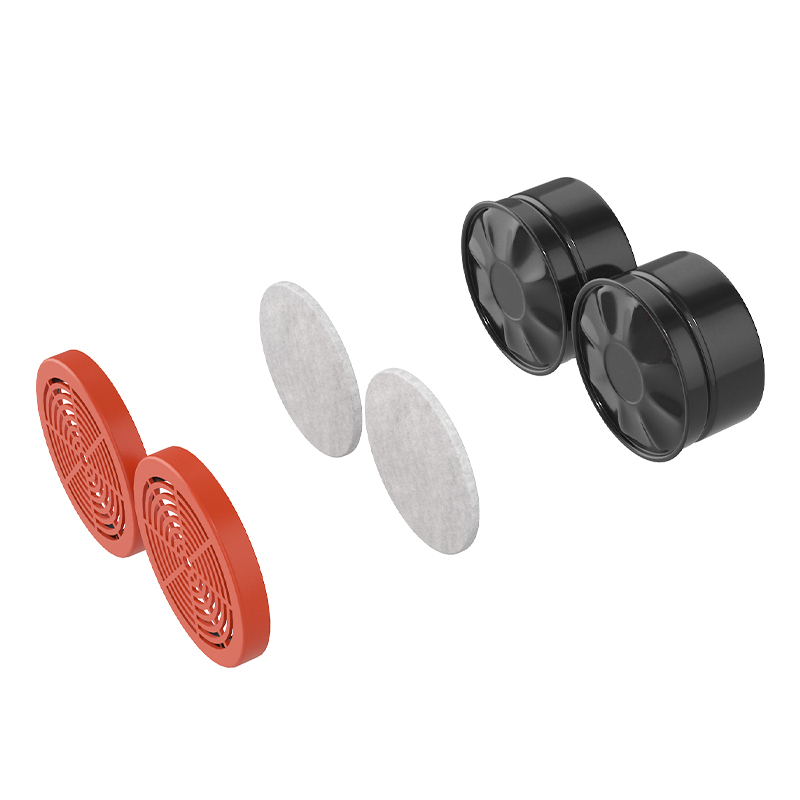
      In automotive painting, the gloss and smoothness of the paint finish are the core process goals, but the potential pollutant risks deserve more attention. From rust removal with primer, color application with base coat to sealing with clear coat, the entire process generates dual pollution: on one hand, paint mist particles with a diameter of 0.1-5 microns, which can be directly inhaled and deposited in the lungs; on the other hand, organic vapors volatilized from paint solvents, such as toluene, xylene, ethyl acetate and other Volatile Organic Compounds (VOCs), which not only have a pungent odor but also may damage the nervous and respiratory systems with long-term exposure. Ordinary dust masks can only block large particles, while activated carbon masks have limited adsorption capacity and are prone to saturation. Only toxic gas cartridges, with their targeted filtration design, can simultaneously block particles and organic vapors, serving as the "core line of defense" for automotive painting protection. Today, we will break down why toxic gas cartridges are a must for automotive painting and whether the popular A2P3 cartridge is truly suitable.   The "composite pollution" characteristic of automotive painting determines that toxic gas cartridges are not an "optional piece of equipment" but a "necessary configuration"—especially when paired with a battery powered air respirator (PAPR). Firstly, the synergistic hazards of paint mist particles and organic vapors are far greater than single pollution—fine particles act as "carriers" for organic vapors, penetrating deeper into the respiratory tract and intensifying toxic infiltration. Ordinary protective equipment cannot handle both: single-layer dust masks have no blocking effect on organic vapors, while pure organic vapor filter boxes will be clogged by paint mist, leading to a sharp drop in filtration efficiency. Secondly, the continuity of painting operations requires stable and durable protective equipment. Toxic gas cartridges adopt a dual-layer structure of "particle pre-filtration + chemical adsorption": paint mist is first intercepted by the pre-filtration layer to avoid clogging the adsorption layer, and activated carbon and other adsorbent materials efficiently capture organic vapors, ensuring stable protection during hours of continuous operation when used with a PAPR. More importantly, compliant toxic gas cartridges must pass professional certifications , with their filtration efficiency and protection range strictly tested to meet the safety and compliance requirements of painting scenarios.   The core logic for selecting the right toxic gas cartridge is to "accurately match the type and concentration of pollution", which requires first understanding the model coding rules of toxic gas cartridges. The model of a toxic gas cartridge usually consists of "protection type code + protection level". For example, the common "Class A" stands for organic vapor protection, "Class P" for particle protection, and the number after the letter represents the protection level (the higher the number, the higher the level). The core pollution in automotive painting is "organic vapor + paint mist particles", so the selection must focus on composite protection types that cover both "organic vapor + particles" rather than single-function cartridges. Combining industry practice and pollution characteristics, the A2P3 cartridge is precisely the core model most suitable for automotive painting. In addition, flexible adjustments are needed: for high-concentration scenarios such as closed spray booths, upgrade to A3P3; for water-based paint spraying, since the paint mist particles are finer, ensure P3 level, but the basic composite protection framework still takes A2P3 as the benchmark. Blindly choosing single-type or low-level toxic gas cartridges is equivalent to "passive exposure" to pollution risks.   As the "golden-matched model" for automotive painting—especially when used with a papr respirator system—the adaptability of the A2P3 cartridge stems from its precise matching to painting pollution. Let's first analyze the core value of the model: "A2" is for medium-concentration organic vapor protection (common painting solvents such as toluene, xylene, and ethyl acetate all have boiling points higher than 65°C, fully covering the protection range of A2), and "P3" achieves high-efficiency particle interception (filtration efficiency ≥99.95%, with nearly 100% interception rate for 0.1-5 micron paint mist particles). In terms of scenario adaptability, whether it is local touch-up painting in auto repair shops, whole-vehicle painting in small spray workshops, or general operations with mainstream oil-based or water-based paints, the concentration of organic vapor is mostly at a medium level, and the diameter of paint mist particles is concentrated at 0.3-5 microns, which perfectly matches the protection parameters of A2P3 and the air supply capacity of a standard PAPR. In practical application, its dual-layer structure of "pre-filtration layer + high-efficiency adsorption layer" can first intercept paint mist to avoid clogging the adsorption layer, extending the continuous service life to 4-8 hours, which fully meets the daily painting work duration. The only exception: when spraying high-concentration special solvent-based paints (such as imported high-solids metallic paints) or continuous operation in fully enclosed spaces, upgrade to A3P3, but A2P3 remains the best choice for over 90% of conventional painting scenarios when paired with a PAPR.   After selecting the core model A2P3, correct usage is essential to maximize protection value. Three key details require focus: first, matching supporting equipment—must be used with a personal air purifying respirator or airtight gas mask, and pass an airtightness test to ensure no gap leakage, avoiding "qualified cartridge but failed protection"; second, establishing a saturation early warning mechanism—when a solvent odor is smelled or breathing resistance increases significantly, replace immediately even if the theoretical service life is not reached. The continuous use limit of A2P3 under medium concentration is usually no more than 8 hours; third, standardizing storage and maintenance—the shelf life of unopened A2P3 is 3 years; after opening, if not used, it should be sealed and stored for no more than 30 days, keeping it away from moisture and direct sunlight to prevent adsorption performance degradation. In conclusion, the core of automotive painting protection is "accurate matching of composite pollution". With its precise protection combination of "organic vapor + high-efficiency particles", the A2P3 cartridge becomes the most suitable model for most scenarios. Based on A2P3 and flexibly upgrading according to scenario concentration, the toxic gas cartridge can truly become a "health shield" for painting practitioners.If you want know more, please click www.newairsafety.com.
    LEES VERDER

  • Laserlashelm en aangedreven luchtzuiverend ademhalingsapparaat: synergetische bescherming voor lassers
    Laserlashelm en aangedreven luchtzuiverend ademhalingsapparaat: synergetische bescherming voor lassers
    Sep 04, 2025
    Laserlassen heeft de precisieproductie radicaal veranderd, maar brengt ook unieke veiligheidsuitdagingen met zich mee – van intense laserstraling tot metaaldampen. Om deze risico's het hoofd te bieden, is gespecialiseerde beschermende kleding essentieel. Vandaag onderzoeken we hoe een laserlashelm samenwerkt met een Aangedreven luchtzuiverende ademhalingsbescherming om de veiligheid van lassers te garanderen.Het schild voor ogen en gezicht: NIEUWE AIR laserlashelmNeem bijvoorbeeld de NEW AIR laserlashelm. De technische specificaties tonen een gerichte bescherming tegen fiberlaserstraling van 950-1100 nm – ideaal voor draagbare laserlasmachines. De helm is voorzien van een duurzaam nylon masker en een laserabsorberend venster van PC (polycarbonaat). Dit venster heeft een optische dichtheid (OD) van meer dan 8 in het bereik van 950-1100 nm, waardoor vrijwel alle schadelijke laserenergie wordt geblokkeerd. Met een DIN4-tint biedt de helm ook bescherming tegen schittering en secundaire booglicht, wat zorgt voor helder zicht en bescherming van ogen en gezichtshuid tegen brandwonden of langdurige stralingsschade.Gemakkelijk ademen met een aangedreven luchtzuiverend ademhalingsapparaatTerwijl de laserlashelm de ogen en het gezicht beschermt, papr-beademingsapparaat pakt een andere ernstige bedreiging aan: luchtwegen. Laserlassen brengt fijne metaaldeeltjes, ozon en stikstofoxiden vrij – die allemaal de luchtwegen kunnen irriteren of beschadigen. Een PAPR gebruikt een batterijgevoede ventilator om lucht door zeer efficiënte filters te zuigen en vervolgens schone, onder druk staande lucht naar de ademhalingszone van de drager te brengen (vaak via een kap of gezichtsmasker). Deze actieve luchtstroom filtert niet alleen verontreinigingen weg, maar vermindert ook de ademweerstand, waardoor lange lassessies comfortabeler worden.Synergie: helm en PAPR als een verenigde verdedigingDe relatie tussen een laserlashelm en een aangedreven luchtmasker is geworteld in uitgebreide beschermingDe helm blokkeert gevaarlijk licht en spatwater zodat het niet in de ogen en het gezicht terechtkomt, terwijl de PAPR ervoor zorgt dat elke ademhaling vrij is van giftige dampen. In omgevingen zoals besloten ruimtes of laserlaswerkzaamheden met een hoog volume (waar de rookconcentraties hoog oplopen en de straling intens blijft), is het gebruik van beide gereedschappen niet alleen aanbevolen, maar ook noodzakelijk voor de gezondheid op de lange termijn. Samen vormen ze een "dubbele barrière" die de twee meest kwetsbare gebieden voor lassers afdekt: zicht/huid en ademhaling.Waarom gecombineerde bescherming belangrijk isLasveiligheid is geen kwestie van één laag. Een hoogwaardige laserlashelm bestrijdt optische gevaren, maar kan de lucht die u inademt niet filteren. Een PAPR daarentegen beschermt uw longen, maar beschermt uw ogen niet tegen laserstralen. Door een laserlashelm te integreren met een Aangedreven luchtzuiverende ademhalingsbeschermingLassers krijgen een holistische bescherming waardoor ze zich kunnen concentreren op precisiewerk zonder hun gezondheid in gevaar te brengen. Of het nu gaat om de auto-industrie, de lucht- en ruimtevaart of kleinschalige productie, dit duo zorgt ervoor dat de veiligheid aansluit bij de verfijning van laserlastechnologie. Wilt u meer weten? Bekijk dan: www.newairsafety.com.
    LEES VERDER
  • Belangrijkste componenten van gasmaskerbussen: "Gerichte formuleringen" afgestemd op "beschermde gastypen"
    Belangrijkste componenten van gasmaskerbussen: "Gerichte formuleringen" afgestemd op "beschermde gastypen"
    Aug 26, 2025
    De kerncomponenten van gasmaskerbussen variëren aanzienlijk, afhankelijk van het beschermingsdoel (serie A/B/E/K). In wezen worden "specifieke componenten gebruikt om de chemische eigenschappen van specifieke gassen te bepalen" – een precisie die essentieel is wanneer deze bussen worden gecombineerd met Aangedreven luchtzuiverende ademhalingstoestellen, die niet kan compenseren voor niet-passende of ineffectieve filtermaterialen. Hieronder volgt een uitleg die overeenkomt met de eerder genoemde gastypeclassificatie, met de nadruk op de relevantie voor PAPR:​1. Voor serie A (organische gassen/dampen, bijvoorbeeld benzeen, benzine): actieve kool als kern​Hoofdbestanddeel: actieve kool met een hoog specifiek oppervlak (meestal kokosnootschaalkoolstof of koolstof op basis van steenkool, met een porositeit van meer dan 90%. Het oppervlak van 1 gram actieve kool is gelijk aan dat van een voetbalveld).Werkingsprincipe: Maakt gebruik van de "fysische adsorptie" van actieve kool – organische gasmoleculen worden door de "van der Waals-krachten" in de microporiën van actieve kool geadsorbeerd en kunnen niet met de luchtstroom in de ademhalingszone terechtkomen. Dit maakt het ideaal voor gebruik in papr-aangedreven luchtzuiverende ademhalingstoestellen Wordt gebruikt bij schilder- of oplosmiddelverwerkingstaken, waarbij continue blootstelling aan organische dampen een betrouwbare, langdurige adsorptie vereist.Verbeterde optimalisatie: voor organische gassen met een laag kookpunt in serie A3 (bijvoorbeeld methaan en propaan, die extreem vluchtig zijn) wordt 'geïmpregneerde actieve kool' (met kleine hoeveelheden stoffen zoals siliconen toegevoegd) gebruikt om de adsorptiecapaciteit voor kleine moleculaire organische gassen te verbeteren, wat cruciaal is voor positieve druk luchtzuiverende beademingsapparatuur gebruikt in olieraffinaderijen of aardgasverwerkingsfabrieken. 2. Voor serie B (anorganische gassen/dampen, bijvoorbeeld chloor, zwaveldioxide): chemische adsorbentia als hoofdcomponent​Hoofdbestanddeel: Geïmpregneerde actieve kool + metaaloxiden (bijv. kopersulfaat, kaliumpermanganaat, calciumhydroxide).Werkingsprincipe: De meeste anorganische gassen zijn sterk oxiderend of irriterend en moeten door middel van "chemische reacties" worden omgezet in onschadelijke stoffen. Bijvoorbeeld:Chloor (Cl₂) reageert met calciumhydroxide om calciumchloride te vormen (een onschadelijke vaste stof);Zwaveldioxide (SO₂) wordt geoxideerd tot sulfaat (dat zich na oplossing in water in het filtermateriaal vastlegt) door een reactie met kaliumpermanganaat.Deze chemische stabiliteit is een must voor aangedreven luchtzuiverende ademhalingstoestellen die worden gebruikt in chemische productie-installaties, waar plotselinge pieken in de concentratie van anorganische gassen snelle en effectieve neutralisatie vereisen.​3. Voor serie E (zure gassen/dampen, bijvoorbeeld zoutzuur, waterstoffluoride): alkalische neutralisatoren​Hoofdbestanddeel: Kaliumhydroxide (KOH), natriumhydroxide (NaOH) of natriumcarbonaat (op actieve kool of inerte dragers).Werkingsprincipe: Maakt gebruik van een "zuur-base-neutralisatiereactie" om zure gassen om te zetten in zouten (onschadelijk en niet-vluchtig). Bijvoorbeeld:Zoutzuur (HCl) reageert met kaliumhydroxide om kaliumchloride (KCl) en water te vormen;Waterstoffluoride (HF) reageert met natriumhydroxide om natriumfluoride (NaF, een vaste stof) te vormen, waardoor corrosie van de luchtwegen wordt voorkomen.Deze corrosiebestendige formule is essentieel voor aangedreven luchtzuiverende ademhalingstoestellen die worden gebruikt in beitswerkplaatsen of bij de productie van halfgeleiders, waar zure dampen zowel gezondheids- als apparatuurrisico's opleveren.​4. Voor serie K (ammoniak- en aminegassen/-dampen, bijvoorbeeld ammoniak, methylamine): zure adsorbentia​Hoofdbestanddeel: met fosforzuur (H₃PO₄) geïmpregneerde actieve kool of calciumsulfaat.Werkingsprincipe: Ammoniak en aminen zijn alkalische gassen en worden gebonden door middel van "zuur-base-neutralisatie". Bijvoorbeeld:Ammoniak (NH₃) reageert met fosforzuur om ammoniumfosfaat ((NH₄)₃PO₄, een vaste stof) te vormen;​Methylamine (CH₃NH₂) reageert met calciumsulfaat om stabiele zouten te vormen die niet meer vervluchtigen.Deze gerichte neutralisatie is essentieel voor aangedreven luchtzuiverende ademhalingstoestellen die worden gebruikt in kunstmestfabrieken of koelhuizen, waar ammoniaklekken een veelvoorkomend gevaar vormen.​III. "Logica van overeenkomsten" tussen structuur en componenten: waarom kunnen gasmaskercilinders niet worden gemengd?​Uit bovenstaande inhoud blijkt dat de "gelaagde structuur" en "componentselectie" van gasmaskerbussen volledig zijn ontworpen rond het "beschermingsdoel". Dit principe is nog belangrijker in combinatie met aangedreven luchtzuiverende ademhalingsmaskers, aangezien deze apparaten zowel de effectiviteit van de juiste bussen als de risico's van onjuiste bussen vergroten:​Als een gasmaskerbus van Serie A (geactiveerde kool) wordt gebruikt ter bescherming tegen zure gassen van Serie E met aangedreven luchtzuiverende ademhalingsmaskers, zullen de zure gassen rechtstreeks in de actieve kool doordringen (er vindt geen neutralisatiereactie plaats) en de continue luchtstroom van de PAPR zal deze ongefilterde gassen rechtstreeks naar de gebruiker brengen;Als een gasmaskerbus uit de K-serie (zuur adsorberend) wordt blootgesteld aan chloor uit de B-serie (sterk oxiderend) in aangedreven luchtzuiverende ademhalingsmaskers, kunnen er nadelige reacties optreden en kunnen er zelfs giftige stoffen worden geproduceerd - stoffen die de PAPR vervolgens in de ademhalingszone brengt.Dit is ook een weerspiegeling van de eerder genoemde 'gouden selectieregel': gasmaskerbussen uit de overeenkomstige serie moeten worden geselecteerd op basis van het type gas in de werkomgeving. Zo wordt gewaarborgd dat de structuur en de componenten echt hun rol spelen, vooral bij integratie met aangedreven luchtzuiverende ademhalingsmaskers.​Conclusie​Een gasmaskerbus is geen "container van één materiaal", maar een geavanceerde combinatie van "gelaagde structuur + gerichte componenten" – ontworpen om harmonieus samen te werken met ademhalingsmaskers met motoraangedreven luchtzuivering. De buitenmantel zorgt voor afdichting van de PAPR-luchtstroom, de voorbewerkingslaag filtert onzuiverheden om de PAPR-efficiëntie te behouden, en de adsorptie-/neutralisatielaag in de kern richt zich nauwkeurig op specifieke gassen om de via PAPR aangevoerde lucht schoon te houden. Uiteindelijk bereikt het het beschermende effect van "het voorkomen van de instroom van schadelijke gassen en het laten ontsnappen van schone lucht". Inzicht in deze details helpt ons niet alleen om gasmaskercilinders wetenschappelijker te selecteren voor standaardmaskers, maar is nog belangrijker voor gebruikers van gemotoriseerde luchtzuiverende ademhalingsmaskers – die vertrouwen op de synergie tussen cilinder en PAPR voor consistente, betrouwbare bescherming. Het stelt ons ook in staat om duidelijker te beoordelen "wanneer cilinders vervangen moeten worden" tijdens gebruik (het beschermingseffect neemt bijvoorbeeld sterk af nadat de adsorptielaag verzadigd is), wat een "bewustzijnsverdedigingslinie" toevoegt voor ademhalingsveiligheid – met name voor degenen die afhankelijk zijn van gemotoriseerde luchtzuiverende ademhalingsmaskers in risicovolle omgevingen. Klik voor meer informatie op www.newairsafety.com.
    LEES VERDER

laat een bericht achter

laat een bericht achter
Als u geïnteresseerd bent in onze producten en meer details wilt weten, laat dan hier een bericht achter, we zullen u zo snel mogelijk antwoorden.
indienen
NEEM CONTACT MET ONS OP: sales@txhyfh.com

Thuis

Producten

Whatsapp

Neem contact met ons op